Preparing for competitive examinations requires a clear understanding of national and international developments. The Hindu newspaper is an important source of information for aspirants preparing for UPSC Civil Services, APPSC, TGPSC, NDA and CDS examinations.Here are eight important current affairs topics based on news reported in The Hindu around November 18, 2026. These topics cover international relations, geography, disaster management, environment, science and technology, education and public health.
APPSC Group 2 Notification 2026: 720 Vacancies Announced
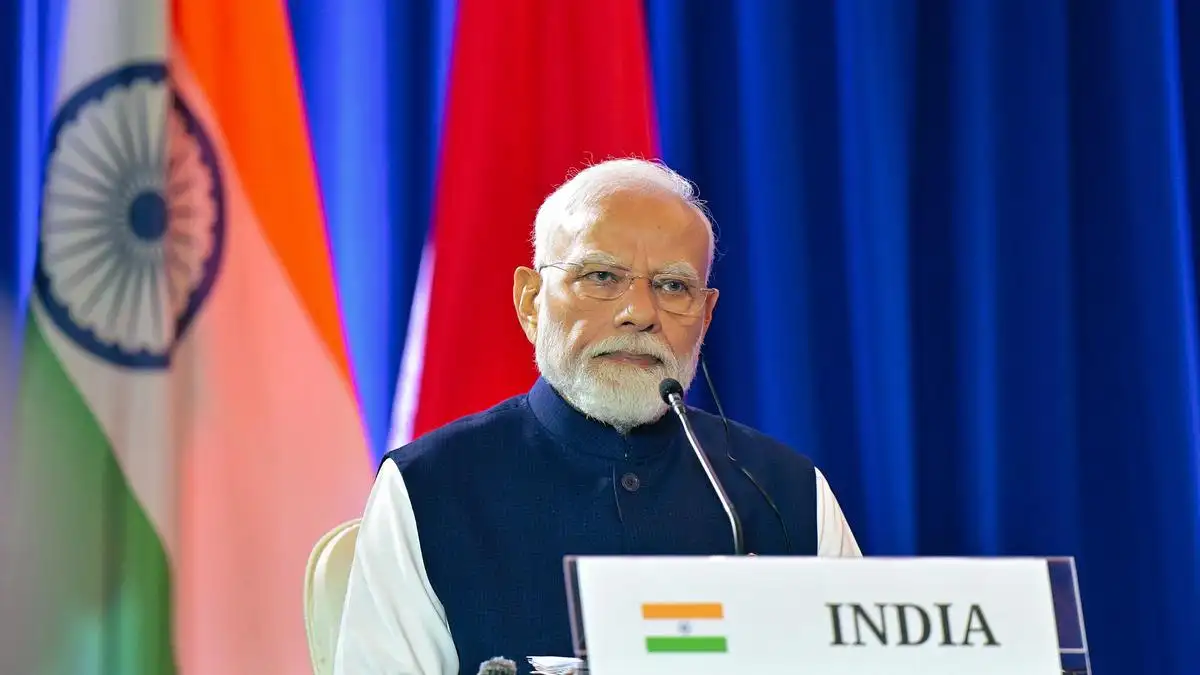
1. Prime Minister Narendra Modi Highlights Peace and Stability at Manila Summit
Prime Minister Narendra Modi participated in the ASEAN-related and East Asia Summit engagements in Manila, Philippines. During his visit, he highlighted the importance of peace, stability, cooperation and predictability in the Indo-Pacific region.
The discussions focused on strengthening India’s relations with ASEAN countries and improving regional cooperation in areas such as maritime security, trade, connectivity and economic development.
The Indo-Pacific region is strategically important because of its major international shipping routes, growing economies and geopolitical significance. India’s engagement with ASEAN also supports its Act East Policy.
Key Points for Competitive Exams:
- ASEAN stands for Association of Southeast Asian Nations.
- ASEAN was established in 1967.
- Its headquarters is located in Jakarta, Indonesia.
- India’s Act East Policy focuses on strengthening relations with Southeast Asian countries.
- The Indo-Pacific is important for international trade and maritime security.
2. Cyclone Akvan Approaches the Andhra Pradesh Coast
Cyclone Akvan has developed over the Bay of Bengal and is moving towards the Andhra Pradesh coast. According to the India Meteorological Department (IMD), the system is expected to intensify into a severe cyclonic storm and subsequently a very severe cyclonic storm.The cyclone is forecast to cross the Andhra Pradesh and Yanam coasts between Nellore and Visakhapatnam around noon on November 20, 2026. The forecast wind speed is 120–130 kmph, with gusts reaching up to 145 kmph.
The approaching cyclone has raised concerns about heavy rainfall, strong winds, coastal flooding and damage to infrastructure. Disaster management authorities are monitoring the situation and preparing for possible evacuations in vulnerable areas.Cyclones are low-pressure weather systems that develop over warm tropical oceans. The Bay of Bengal is particularly vulnerable to tropical cyclones due to its oceanographic and atmospheric conditions.
Key Points for Competitive Exams:
- IMD stands for India Meteorological Department.
- IMD operates under the Ministry of Earth Sciences.
- Cyclones in the North Indian Ocean are named through the WMO/ESCAP Panel on Tropical Cyclones.
- Cyclone preparedness involves early warning systems, evacuation and disaster response.
- The Disaster Management Act was enacted in 2005.
3. Construction Activities Near Kaziranga Wildlife Corridors Raise Environmental Concerns
Construction activities near wildlife corridors around Kaziranga National Park in Assam have raised environmental concerns.An environment activist from eastern Assam has brought the issue to the attention of the Supreme Court-constituted Central Empowered Committee. The concerns relate to the possible impact of construction activities on wildlife movement and natural habitats.Wildlife corridors are important ecological pathways that allow animals to move between different habitats. They help maintain genetic diversity, support migration and reduce habitat fragmentation.
Unregulated construction, roads and other infrastructure projects can obstruct animal movement and increase the risk of human-wildlife conflict.
Kaziranga is internationally recognised for its population of the one-horned rhinoceros and its rich biodiversity.
Key Points for Competitive Exams:
- Kaziranga National Park is located in Assam.
- It is famous for the greater one-horned rhinoceros.
- Wildlife corridors connect fragmented habitats.
- Habitat fragmentation is a major threat to biodiversity.
- The Wildlife (Protection) Act was enacted in 1972.
4. Kedarnath Generates 73 Tonnes of Waste During 2026 Char Dham Yatra
Kedarnath generated approximately 73 tonnes of waste during the 2026 Char Dham Yatra, highlighting the environmental challenges associated with religious tourism in the Himalayan region.Reports indicate that around 65.65 lakh pilgrims visited the four Char Dham shrines and Hemkund Sahib during the pilgrimage season.
The large number of visitors creates pressure on the fragile Himalayan ecosystem. Waste disposal, plastic pollution, sanitation, water management and protection of natural habitats are important challenges in these high-altitude pilgrimage destinations.Sustainable tourism practices, proper waste segregation, recycling facilities and responsible visitor behaviour are essential to protect the Himalayan environment.
Key Points for Competitive Exams:
- The four Char Dham shrines are Badrinath, Kedarnath, Gangotri and Yamunotri.
- Kedarnath is located in Uttarakhand.
- The Himalayas are ecologically fragile.
- Sustainable tourism helps protect natural resources.
- Solid Waste Management Rules were notified in 2016.
5. India Needs a Comprehensive Space Security Doctrine
The growing importance of satellites in communication, navigation, weather forecasting, disaster management and national security has increased the need for a comprehensive space security framework in India.The discussion on India’s space security doctrine highlights the risks posed by anti-satellite weapons, cyberattacks, signal jamming, spoofing and other threats to space-based infrastructure.
Satellites are essential for several critical services. Any disruption to these systems can affect civilian infrastructure, defence operations, financial services and emergency communication networks.India demonstrated its anti-satellite capability through Mission Shakti in March 2019. The mission established India’s capability to intercept a satellite in low Earth orbit.
However, the objective of space security should not be to turn outer space into an arena of conflict. It should focus on protecting space assets, ensuring responsible behaviour and maintaining the peaceful use of outer space.
Key Points for Competitive Exams:
- ISRO stands for Indian Space Research Organisation.
- ISRO headquarters is located in Bengaluru.
- Mission Shakti was conducted in March 2019.
- ASAT stands for Anti-Satellite weapon.
- The Outer Space Treaty was signed in 1967.
6. IIT Madras to Train Teachers in Artificial Intelligence Literacy
The Indian Institute of Technology Madras is planning to train teachers across India in Artificial Intelligence literacy.
The initiative aims to improve teachers’ understanding of AI and its applications in education. Artificial Intelligence is increasingly being used in learning platforms, educational assessment, personalised learning and digital classrooms.
Training teachers in AI literacy can help educational institutions adopt technology responsibly and improve the quality of teaching and learning.
However, the use of AI in education also raises concerns regarding data privacy, algorithmic bias, academic integrity and unequal access to technology.
The initiative highlights the importance of developing digital skills among educators as India moves towards technology-enabled education.
Key Points for Competitive Exams:
- IIT Madras is located in Chennai, Tamil Nadu.
- Artificial Intelligence enables machines to perform tasks that normally require human intelligence.
- AI applications include machine learning, natural language processing and computer vision.
- NEP 2020 emphasises technology integration in education.
- Digital literacy is important for inclusive education.
7. Bird Flu Confirmed at Two Poultry Farms in Kerala
Bird flu has been confirmed at two poultry farms in Alappuzha district of Kerala. Authorities have planned to cull approximately 26,000 birds to prevent further spread of the infection.
Bird flu, also known as avian influenza, is a viral disease that primarily affects birds. Certain strains can also infect humans and other animals.
The outbreak highlights the importance of disease surveillance, biosecurity measures, veterinary monitoring and coordination between public health and animal health departments.
The One Health approach recognises that human health, animal health and environmental health are closely interconnected. It encourages cooperation among different sectors to prevent and control infectious diseases.
Key Points for Competitive Exams:
- Bird flu is also called avian influenza.
- It is caused by influenza viruses.
- Alappuzha is a district in Kerala.
- One Health connects human, animal and environmental health.
- Early detection and biosecurity are important for controlling outbreaks.
8. Indian Seafarer Missing After Attack on Commercial Vessel in Strait of Hormuz
An Indian national went missing following an attack on the commercial vessel MT Tara Gas in the Strait of Hormuz.
According to reports, 24 Indian nationals were aboard the vessel. The Ministry of External Affairs stated that 21 of them had been safely evacuated, while one crew member remained missing and two were injured.
The incident has raised concerns about the safety of Indian seafarers and commercial shipping in the region.
The Strait of Hormuz is one of the world’s most strategically important maritime routes. A significant share of global petroleum and liquefied natural gas shipments passes through this narrow waterway.
Any disruption in the Strait of Hormuz can affect global energy prices, international trade and energy security.
Key Points for Competitive Exams:
- The Strait of Hormuz connects the Persian Gulf with the Gulf of Oman.
- It is a major route for global oil and gas transportation.
- Maritime security is important for international trade.
- Energy security is an important component of India’s foreign policy.
- The Ministry of External Affairs handles India’s external relations.
Conclusion
The important developments reported in The Hindu around November 18, 2026, highlight several key issues relevant to competitive examinations. Cyclone Akvan brings attention to disaster management and coastal preparedness, while the Kaziranga wildlife corridor issue highlights biodiversity conservation.
India’s space security requirements and the use of Artificial Intelligence in education demonstrate the growing importance of science and technology. The bird flu outbreak underlines the need for the One Health approach, while the Strait of Hormuz incident highlights maritime and energy security.
A regular study of newspaper-based current affairs helps aspirants connect daily news with the static syllabus and develop a better understanding of important national and international issues.