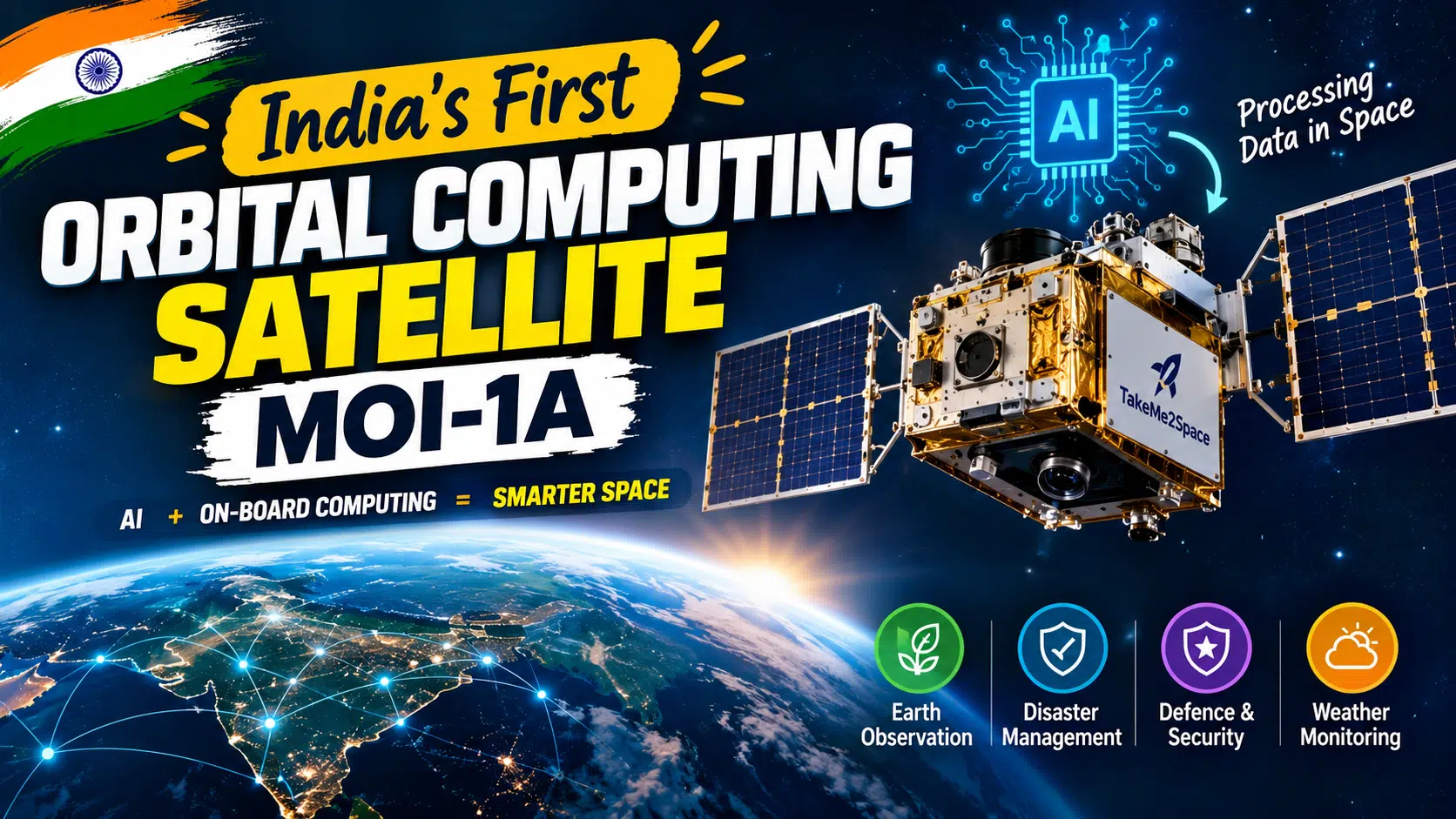
India’s space sector is moving beyond traditional satellite communication and Earth observation towards advanced computing and artificial intelligence in orbit. The proposed MOI-1A orbital computing satellite has attracted attention as an example of the growing role of private companies and advanced computing technologies in India’s space ecosystem.Orbital computing refers to processing data directly on a spacecraft rather than transmitting all the raw data to Earth. Conventional satellites may collect enormous amounts of information and send it to ground stations for processing. With on-board computing, artificial intelligence and specialised processors can analyse information closer to where it is generated.
LPG Subsidy Rule 2026: Aadhaar Biometric Authentication Mandatory from October 1
This approach can reduce communication requirements and improve the speed with which useful information is obtained. It may be particularly valuable for applications involving Earth observation, disaster management, defence, weather monitoring and other data-intensive activities. The development of such technologies also reflects the increasing participation of India’s private space sector. Start-ups and private companies are contributing to satellite manufacturing, launch services, data applications and space-based technologies. This changing ecosystem is important for UPSC aspirants because India’s space policy is increasingly connected with innovation, entrepreneurship and strategic technology.
From a UPSC perspective, orbital computing can be linked with Artificial Intelligence, Internet of Things, satellite technology, remote sensing and the commercialisation of space activities. Candidates should understand the difference between conventional ground-based data processing and edge or on-board computing.Another important area is the growing amount of data generated by satellites. Processing some information directly in orbit can potentially reduce bandwidth requirements and enable faster decision-making. This becomes increasingly relevant as satellite constellations expand and space missions become more sophisticated.
For India, advanced space computing can contribute to technological self-reliance and strengthen the country’s emerging space economy. It also demonstrates how AI is becoming relevant beyond conventional terrestrial applications. For UPSC Prelims, aspirants should revise concepts such as orbital satellites, remote sensing, artificial intelligence, on-board processing and private participation in the Indian space sector. For UPSC Mains, the topic can be connected with GS Paper III themes such as science and technology, innovation and space technology.Thus, MOI-1A and orbital computing represent a broader shift towards intelligent spacecraft capable of processing information closer to the source